
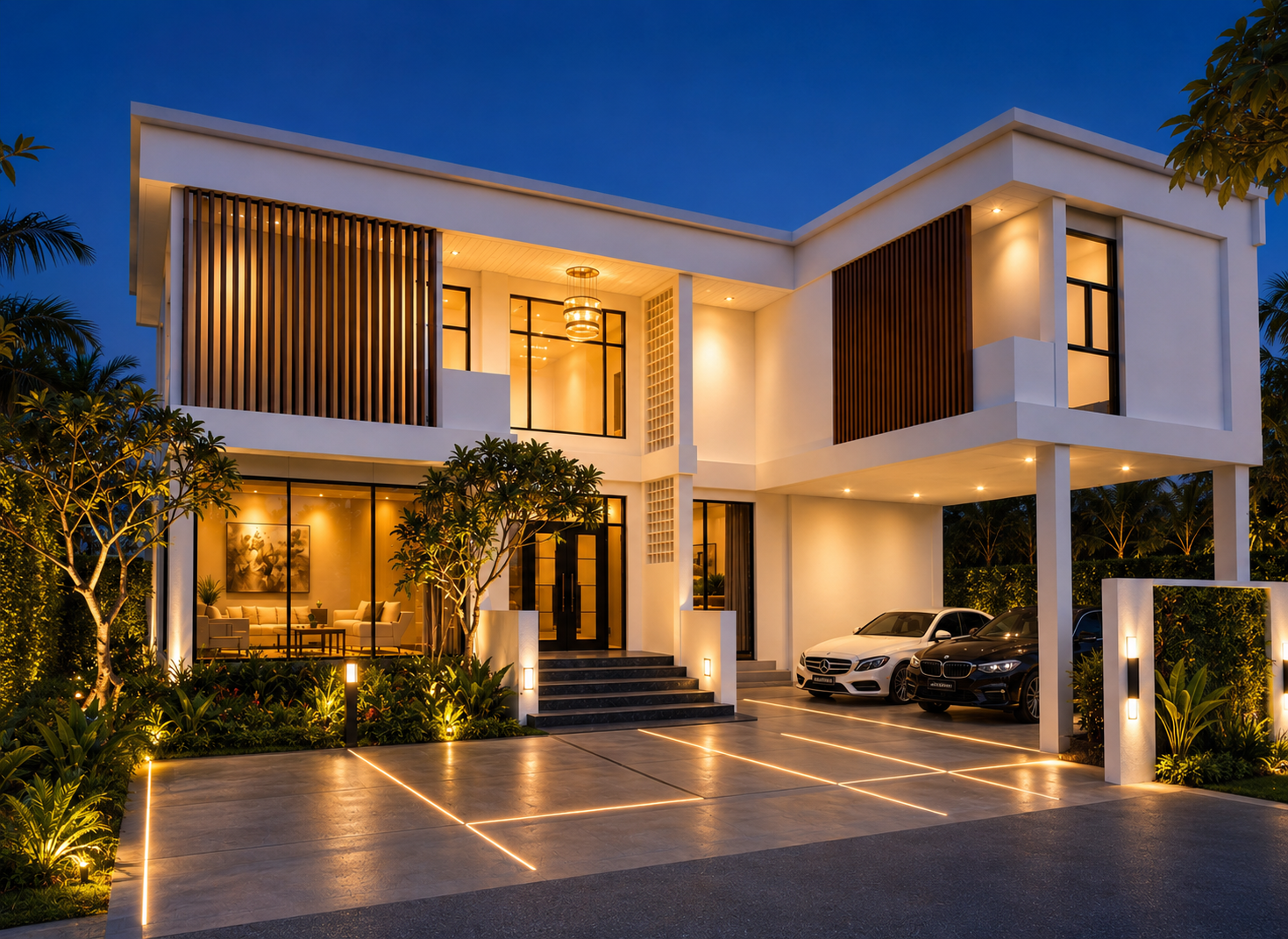
The Siphathay Residence
Location: Vientiane Capital, Laos
Size:
400sqm (2 Storeys)
Duration:
15 months
Status:
Under Construction
The Brief
This house is personal.
Designed by popARCH's own founder and principal architect for himself, his wife, and their three children, the Siphathay Residence represents more than an architectural project — it is the family's first home of their own. A place to grow independently, to build routines and memories, and to put down roots away from extended family for the first time.
The vision was clear from the start: a warm, joyful, and prosperous home — one that feels both grounded and full of possibility. A home where five people could genuinely thrive together.
The Concept
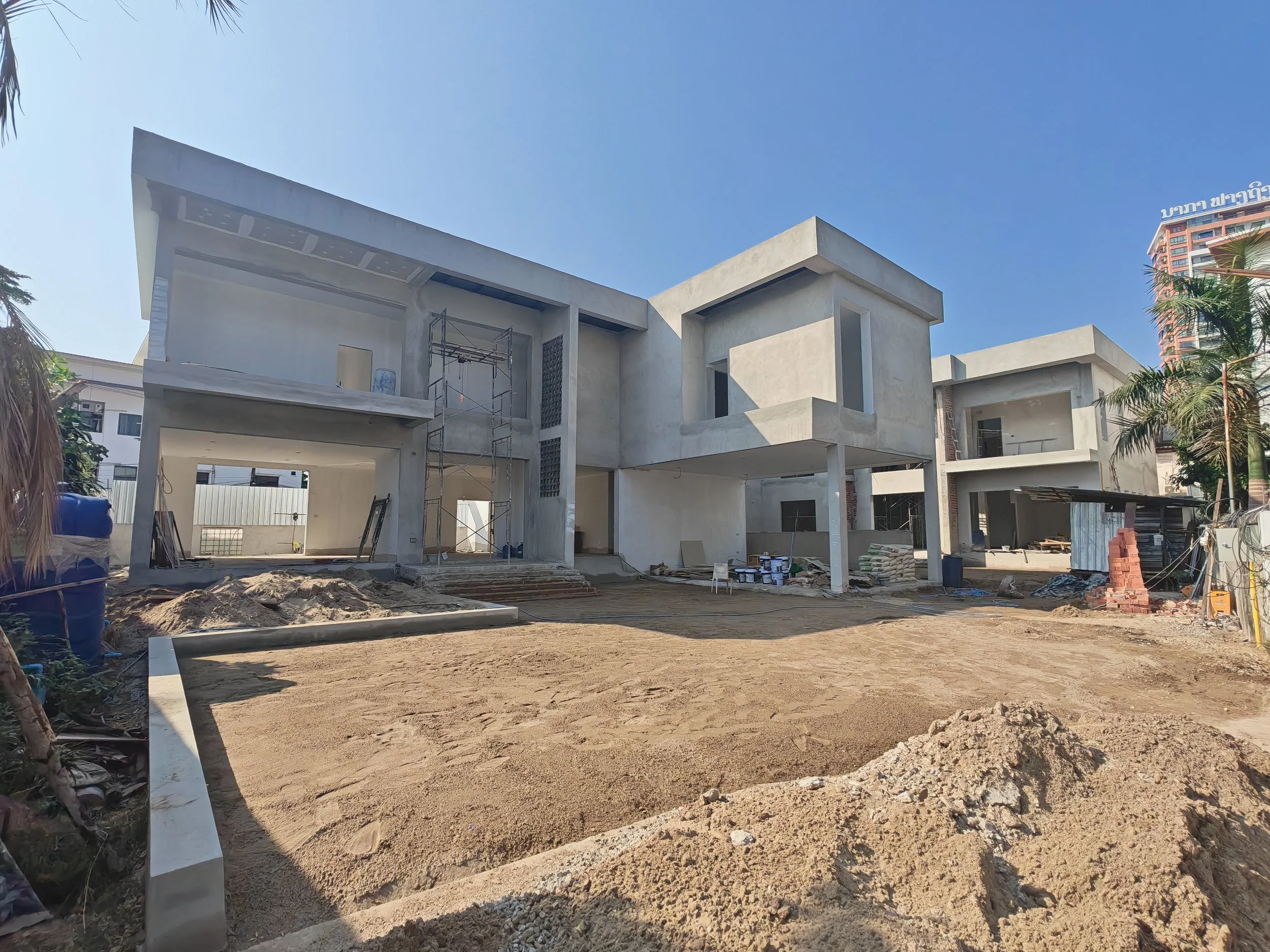
The house is organized in an L-shaped configuration, oriented to face northwest. This form was not an aesthetic choice alone — it is a direct response to Vientiane's tropical climate and the specific conditions of the site.
The longer wing of the L contains the main living spaces on the ground floor, while the shorter wing — capped by the master bedroom — extends forward to define the boundary of a generous central front yard. This configuration means the master bedroom volume acts as a natural shade buffer, blocking the harsh afternoon and sunset sun from penetrating the western face of the house. The result is a cooler interior throughout the hottest parts of the day, without relying solely on mechanical cooling.
The front yard, framed by both wings of the L, becomes the heart of the composition — a green, landscaped arrival space that the entire house looks out onto. Lush planting softens the boundary between inside and out, bringing natural air movement and a sense of calm to every room that faces it.
Ground level is given entirely to family and communal life — a generous living and dining area, kitchen, outdoor terrace, and a guest bedroom with its own access. The kitchen and maid's quarters sit discreetly to the rear, maintaining a clean separation between service and living zones.
Upper level is dedicated to rest and privacy — the master bedroom with walk-in wardrobe and en-suite at the tip of the L, commanding views over the full width of the front yard, with three additional bedrooms sharing the remaining wing.
Vertical timber screens on the façade serve a dual purpose: they filter direct sunlight into the upper level rooms while providing visual privacy from the street without closing the house off entirely. The screens are a considered detail — functional first, aesthetic second.
Large glazed openings throughout the ground floor are shaded by deep roof overhangs, allowing abundant natural light and cross-ventilation while keeping direct sun out. From inside, these openings frame the front yard as a living picture — green, open, and always in view.
The covered carport, located directly beneath the master bedroom, provides sheltered parking for two vehicles — a practical necessity in Vientiane's climate, where cars exposed to daily sun and monsoon rain deteriorate rapidly.
The Solution
The orientation and form of the building work climatically, spatially, and functionally. The L-shape resolves the tension between openness and privacy — the house presents itself generously to the street while maintaining a clear separation between the family's private world and the outside.
The layout is organized around a clear hierarchy: arrival → common living → private sleeping. Circulation is legible and efficient. Every bedroom on the upper level has access to natural light and ventilation. The master bedroom, positioned at the apex of the L, benefits from views in two directions and remains the most sheltered and private room in the house.
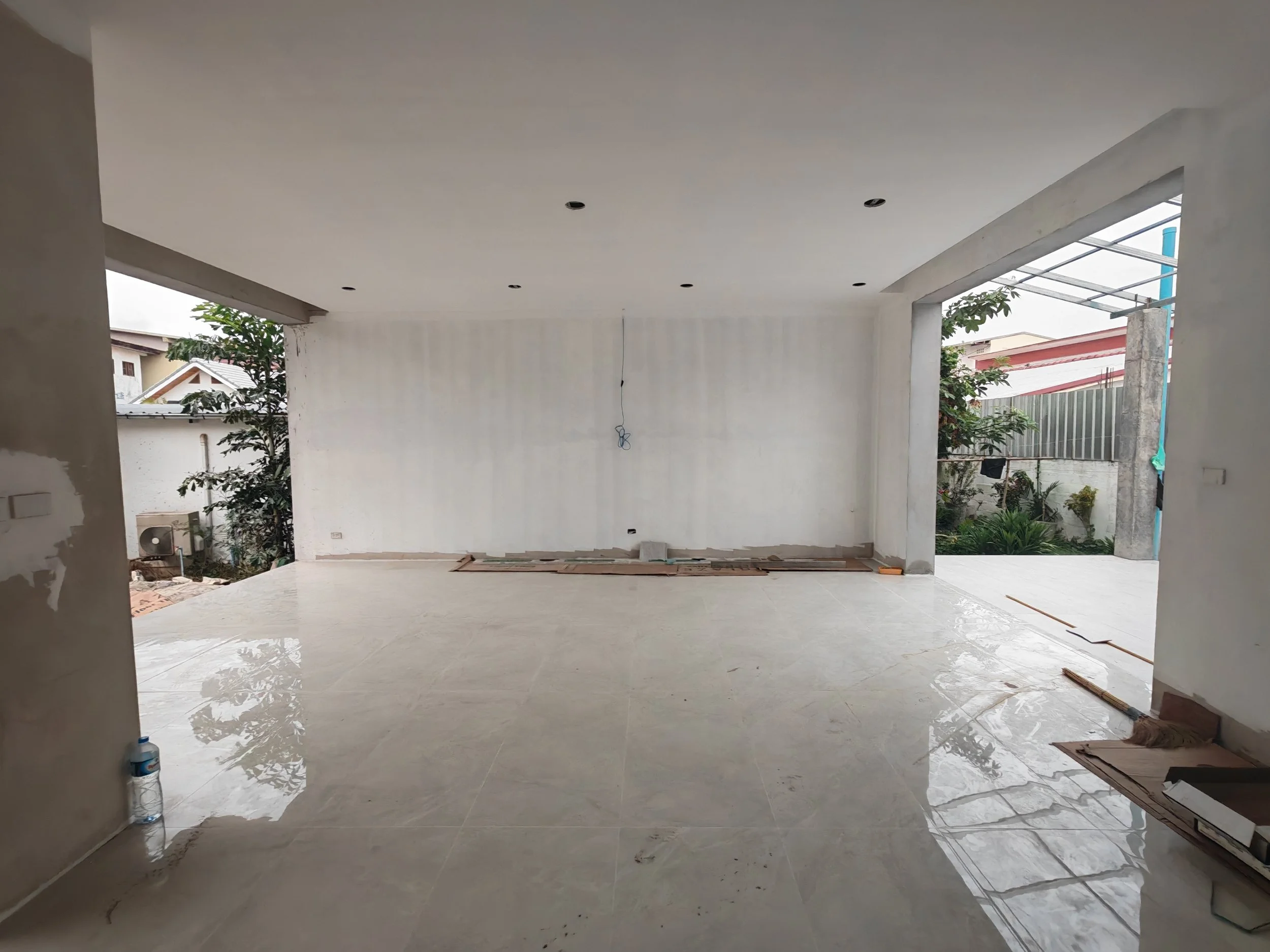
Material selections reinforce the warmth of the concept — large-format polished porcelain floors throughout the ground level for a seamless, reflective finish; timber accents on the screens and ceiling soffits to bring natural texture; and a restrained palette of white render, dark steel frames, and warm wood that will age gracefully in the Lao climate.
Key Challenges
Achieving the rendering on site. The gap between architectural intention and construction reality is where most residential projects lose their quality. On this project, the architect is also the client — which means the standard of expectation is exceptionally high, and every deviation from the design intent is immediately visible and personally felt. Close, ongoing site supervision has been essential.
Material and finish selection. With five people's preferences to balance — and a life partner who has equal say in every interior decision — the selection process for finishes, tiles, fixtures, and fittings has required patience, communication, and a willingness to find solutions that work for the whole family, not just the architect's instincts.
Construction coordination. Managing design intent through a contractor-led build requires constant communication, clear shop drawings, and real-time decision-making on site. The relationship between design team and construction team has been a key factor in maintaining quality throughout.
Construction Process
This project is currently under construction and is being documented in real time on our Instagram and Facebook pages. Follow along at @poparch.co
A Note from the Architect
"Designing your own home is the most honest thing an architect can do. Every decision you make, you live with — literally. There is no hiding behind a client brief or a committee. It is your vision, your family's needs, and your name on the building.
I designed this house the same way I design for every client: with the climate in mind first, the family second, and the aesthetics as the natural result of solving those two things well.
I hope it shows."
— Dr. Siphathay Phanphengdy, Founder & Principal Architect
-
![]()
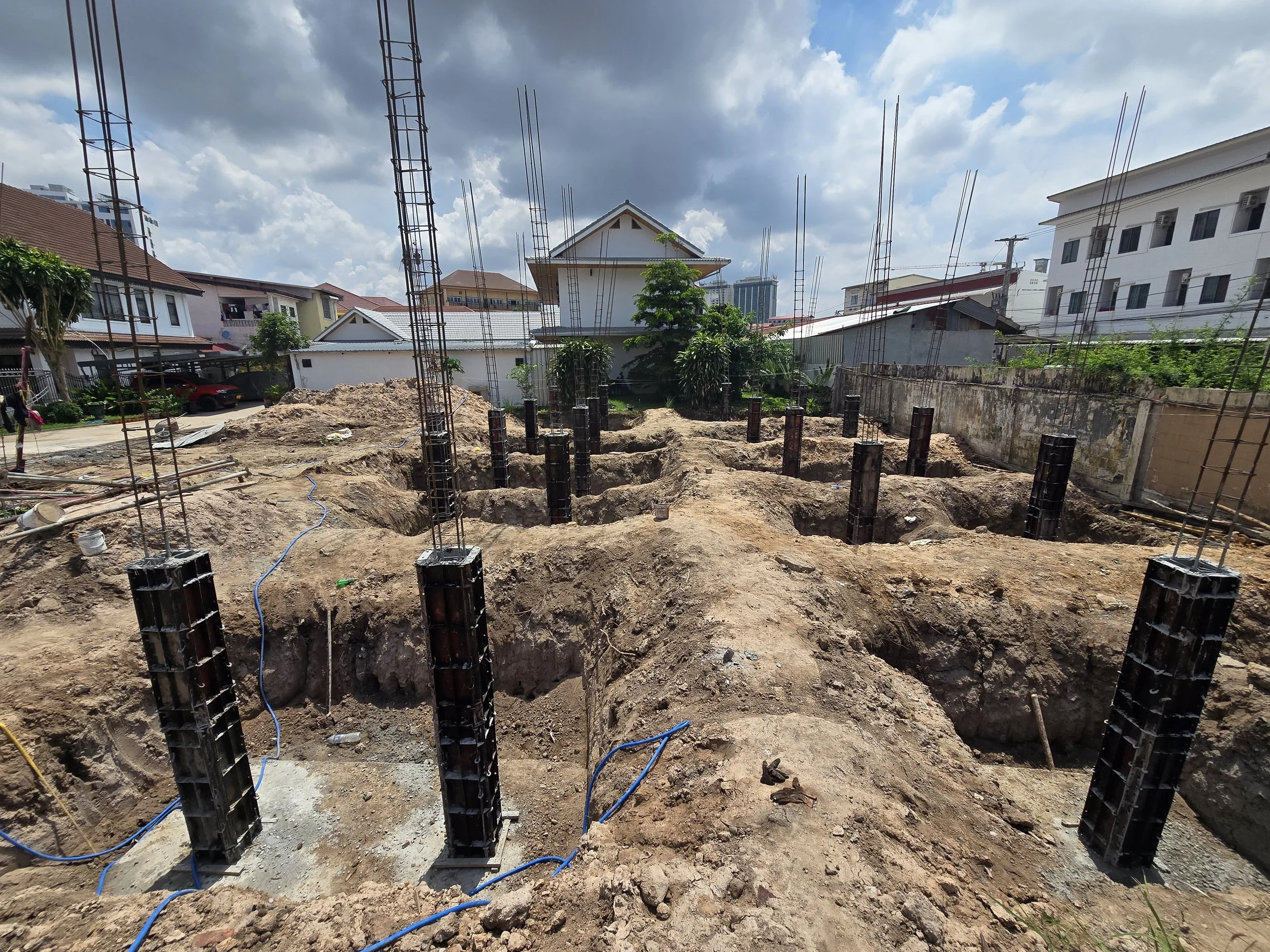
Foundations
-
![]()
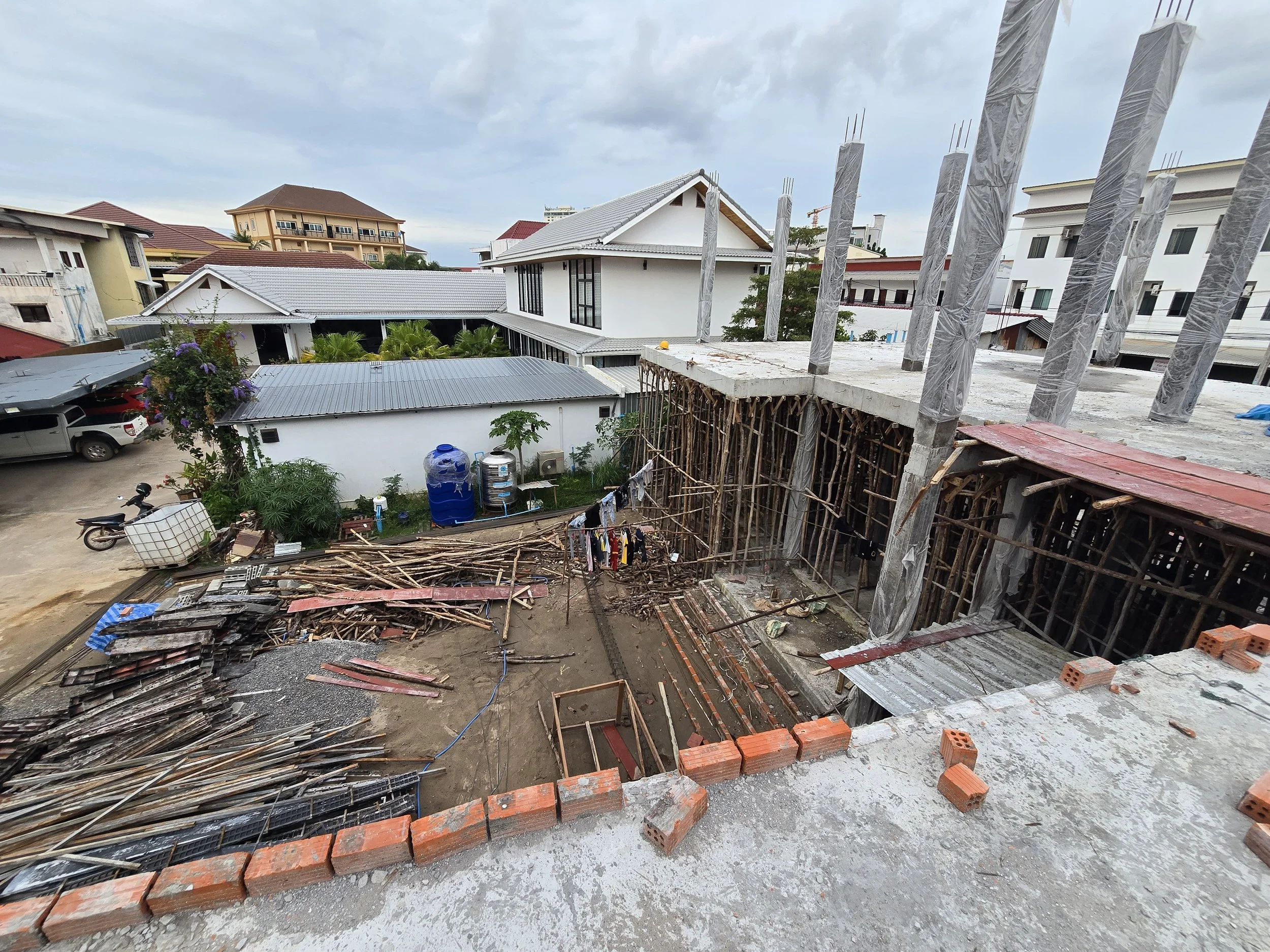
Structure Phase
-
![Roofing]()
Roofing
-
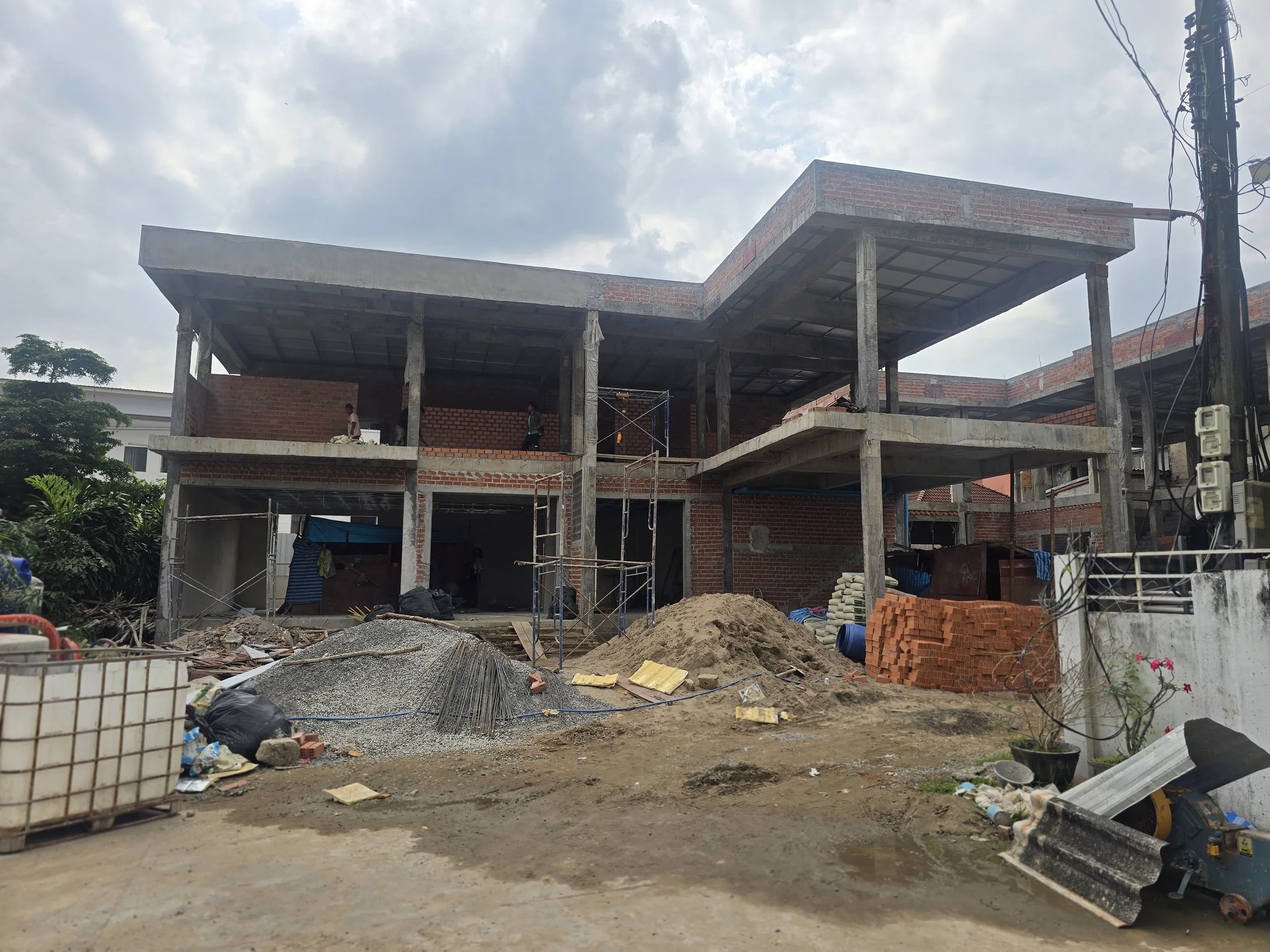
![The Siphathay Residence - Mid Construction]()
Envelope
-
![]()
Tiling & Finishes
-
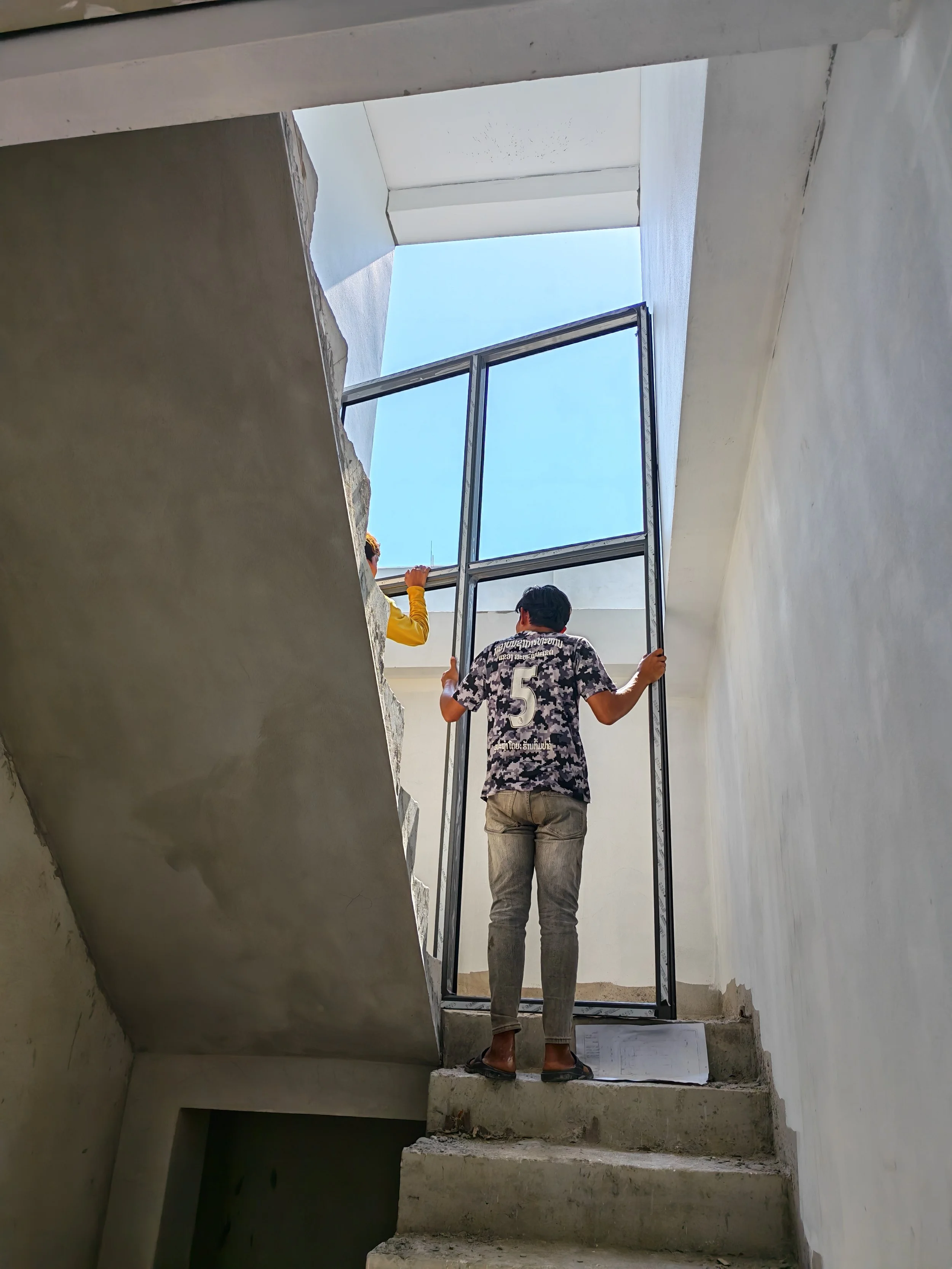
![Installing Windows]()
Window Installation
Interested in a similar project?
We work closely with clients to design and deliver homes that are both functional and refined.